

How to Attract More Visitors to Your Exhibition Stand
Exhibitions are busy, competitive environments. Even with a great product or message, attracting visitors to your stand does not happen by chance. It is the result of clear objectives, considered design, engaging experiences and a confident, well-prepared team.
If your stand feels quiet, engagement is dropping off throughout the day, or you are questioning the return on investment from exhibiting, this guide will help. Below, we break down the most effective ways to attract more visitors to your exhibition stand and, just as importantly, turn that attention into meaningful conversations.

Start With Visibility on the Show Floor
The first challenge is simple. Visitors need to see your stand before they can engage with it.
In a crowded exhibition hall, height and visibility are key. Tall structures, branded towers and hanging banners allow your stand to be seen from a distance and help guide foot traffic towards you. These features do not just look impressive. They give your brand presence long before a visitor reaches your aisle.
When designing your stand, consider how it will appear from multiple angles and distances. If someone can only understand who you are once they are directly in front of the stand, you are already at a disadvantage.
Use Lighting to Draw the Eye
Lighting is one of the most powerful tools in exhibition stand design, yet it is often overlooked.
Well-planned lighting can:
- Highlight key areas of your stand
- Emphasise branding and messaging
- Create atmosphere and depth
- Naturally draw attention in busy halls
LED lighting, backlit graphics and illuminated features help your stand stand out against neighbouring builds. Movement also plays an important role. LED screens or dynamic content immediately catch the eye and encourage visitors to pause, even from across the hall.
Lighting should never be an afterthought. It is a core part of how visitors experience your stand.

Design for Flow, Not Just Appearance
A stand that looks good does not always function well.
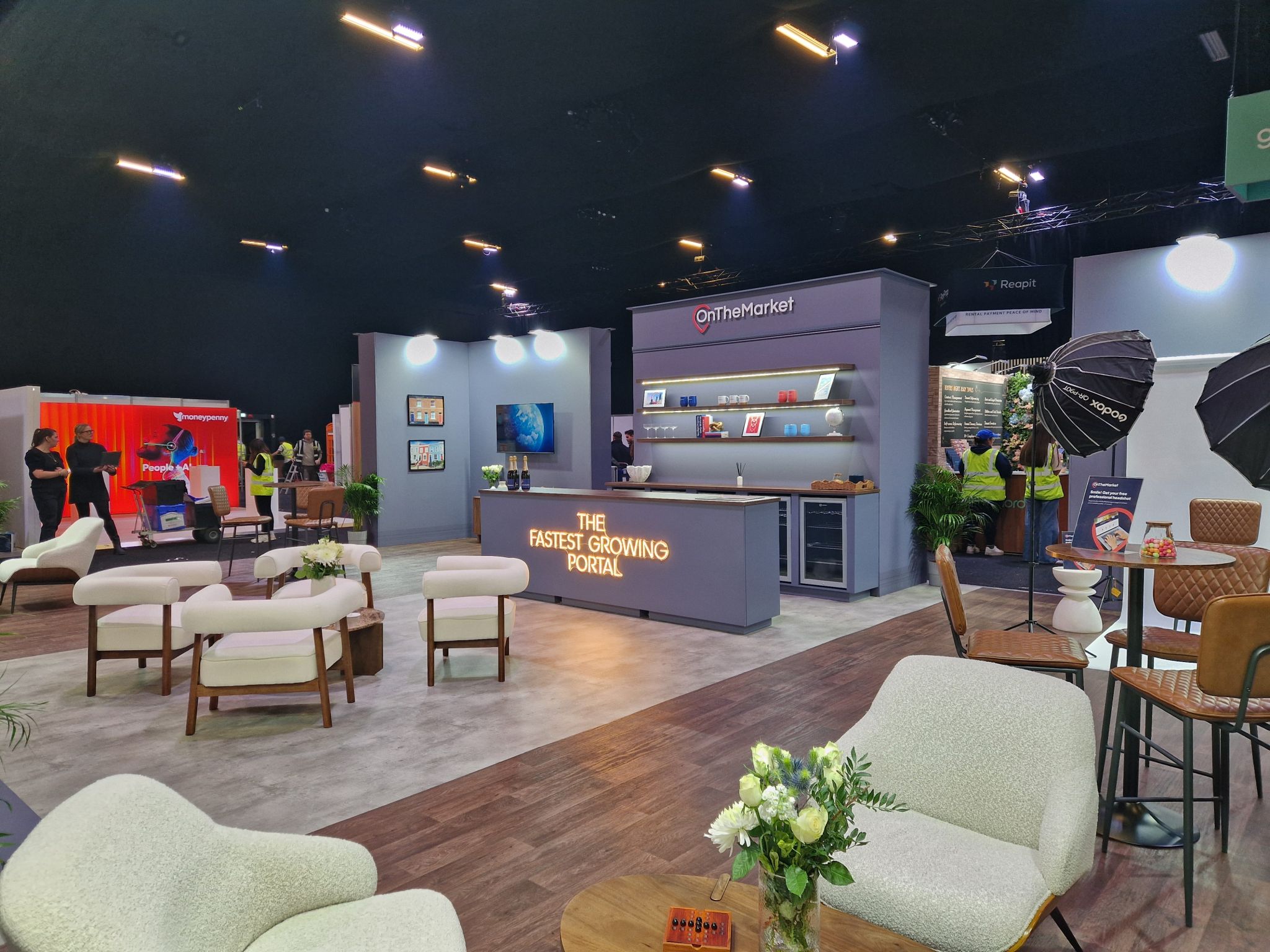
Designing for visitor flow is essential if you want people to feel comfortable approaching and entering your space. Open layouts, clear entry points and defined zones help guide visitors naturally through the stand.
Avoid barriers at the front of the stand. Counters placed too close to the aisle can feel uninviting and stop people from stepping inside. Instead, create welcoming spaces that encourage movement, conversation and interaction.
When visitors can clearly see where to go and what to do, engagement becomes much easier.
Make Your Message Clear in Three Seconds
You have only a few seconds to communicate who you are and why you matter.
Your stand messaging should answer three simple questions almost instantly:
- Who are you?
- What do you do?
- Who is it for?
Strong headline messaging, simple language and confident branding are far more effective than crowded graphics or lengthy explanations. If visitors have to work too hard to understand your message, they will move on.
Clarity beats complexity every time.
Create Reasons for Visitors to Stop
Attracting attention is one thing. Giving visitors a reason to stop is another.
Interactive elements can do much of the hard work for your team. These might include:
- Live product demonstrations
- Interactive screens or software walk-throughs
- Games or challenges
- Competitions or leaderboards
- Comfortable seating areas for conversation
A good example of this in action was Kronos, who used a BATAK reaction challenge on their stand. The LED wall game attracted attention, encouraged participation and was supported by social media and a live leaderboard. Visitors not only stopped, but returned to the stand throughout the show to improve their scores.
The key is relevance. Engagement tools should support your brand and messaging, not distract from them.
Your Team Plays a Bigger Role Than You Think
Even the best stand design will fall short if your team is not prepared.
Before the show, it is essential that everyone understands:
- Why you are exhibiting
- What success looks like
- Who the target audience is
- What conversations they should be having
- How follow-up will work after the event
Brief your team properly before the doors open and refresh that briefing on-site. Arriving early allows time to align everyone and set the tone for the day.
Motivation is just as important. Long days on your feet can drain energy and impact engagement. Regular breaks, clear roles and personal targets can make a big difference. Simple goals such as speaking to a certain number of visitors per hour or running a set number of demonstrations help keep focus and momentum high.
Remember, the last visitor of the day could be the most important.
Promote Before the Show Opens
Visitor attraction does not start on the show floor.
Pre-show promotion plays a huge role in driving traffic to your stand. Email campaigns, social media posts, meeting bookings and teaser content all help build awareness and intent before the event begins.
If visitors already know who you are and why they should visit, they are far more likely to seek you out during the show.
Measure What Actually Worked
Attracting visitors is only valuable if it leads to meaningful outcomes.
After the show, review:
- The quality of conversations, not just footfall
- Which features or activities attracted the most engagement
- How well your team converted interest into follow-up opportunities
- What you would repeat or change next time
These insights help refine your approach and ensure each exhibition performs better than the last.
How Expo Helps You Attract the Right Visitors
At Expo, we design exhibition stands with attraction, engagement and performance in mind.
From visibility-enhancing structures and lighting to interactive features and considered layouts, we help brands create spaces that stand out for the right reasons. Just as importantly, we support the full journey from planning and design through to on-site delivery and post-show reflection.
Attracting more visitors is not about gimmicks. It is about clarity, confidence and creating an experience that people want to be part of.
Related pages